Record work, automated
The record work your staff do by hand, built once and run for you.
Pulling records from several systems, cleaning and matching them, checking them, then doing it all again next month. We build that as a workflow that runs on a schedule, with a note of how every result was made.
- Public works and utilities
- Planning departments
- Health departments
- Records and GIS teams
- Built from the records you already keep
- Checked before anything is published
- Runs again every week
Case study
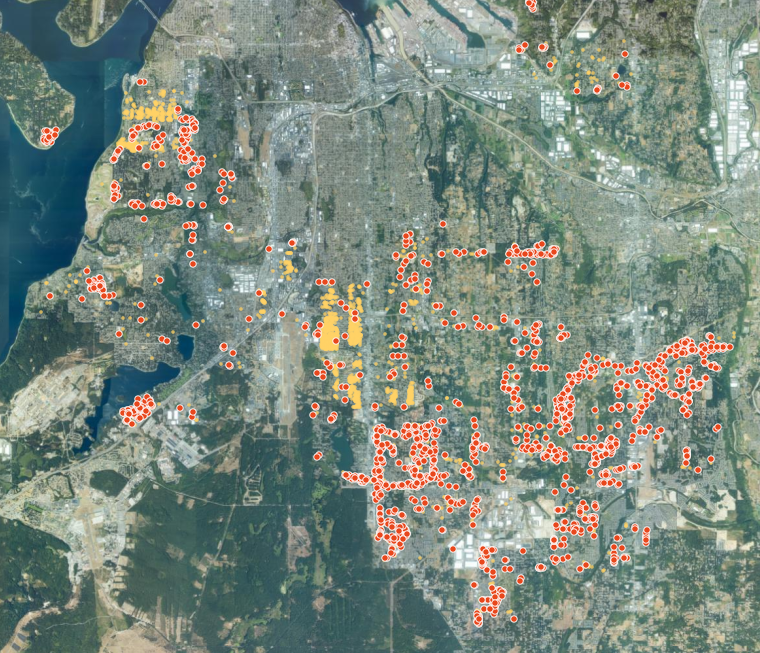
1,810 homes in Pierce County with a recent septic record sit within 200 feet of a county sewer main
The health department holds the septic records, the county holds the sewer lines, and the permit offices hold the connections. No office had the picture. We joined them for every parcel in the county.
How it was built
- The Tacoma-Pierce County Health Department's septic records for 74,953 parcels, matched to their parcels and dated from their files.
- The distance from every lot to the nearest Pierce County sewer main.
- Septic decommission records and sewer connection and repair permits from Pierce County and Tacoma, to take off homes that connected.
- Assessor land use and sales, and the county's stream, wetland and floodplain maps.
What we checked
We read the records behind 10 of these homes at random: each had a septic inspection report, several from 2023, and no sewer permit of any kind.
Limits
The distance is to Pierce County's own mains; city sewers are not in that layer, and connection permits from other sewer providers are not all in what we hold, so some homes counted may be connected. 2,797 more homes have only older or undated septic records and are left out of the headline. A screening from public records, not a survey or an engineering study. The list of homes is shared only with the agencies responsible for them.
What a workflow does
Scanned archives, made searchable
We turned the health department's scanned septic files into an index tied to each property and dated from its file. An office sitting on scanned records can have the same.
Records that share no ID, matched
Permits from two systems, scanned septic records and assessor files, each matched to the right property though they share no common number. The same matching applies to accounts, licences and inspections.
Checked, and kept current
Every result is checked against rules before it is published, and the workflow runs again on its schedule, so the answer does not go stale when the project ends.
How it works
Tell us the question and where the records live.
We build the workflow and show you the first result, with how it was made.
It runs on a schedule, and you get each update with its method note.